


Every fall, Hoosiers raise beer steins, bite into sausages slathered with mustard and sauerkraut, and gather at long communal tables all across the state. For many, Oktoberfest is a beloved excuse to celebrate cooler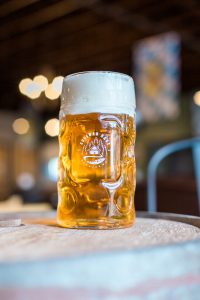 weather, traditional food, seasonal beers, and good company. A tradition that began more than 200 years ago as a royal wedding in Bavaria ties more deeply to Indiana than most people realize.
To separate fact from folklore, we spoke with historians, brewers, butchers, and bakers—all longtime stewards of Indiana’s German heritage—about what Oktoberfest really is, why it has endured for generations, and how Hoosiers continue to make it their own.
OKTOBERFEST: A BRIEF HISTORY
The world’s most famous folk festival began on October 12, 1810, when Crown Prince Ludwig of Bavaria married Princess Therese of Saxe-Hildburghausen. The citizens of Munich were invited to join the festivities and the celebration was such a success that it returned the following year. A tradition was born.
“It is the perfect archetype for a festival,” said Giles R. Hoyt, PhD, professor emeritus and director emeritus of the Max Kade German-American Research and Resource Center at Indiana University Indianapolis. “It has all the accoutrements: fashion, polka music, dancing, food, drink, games, and community. It’s simply a lot of fun.”
One of the biggest misconceptions, however, is right in its name: Modern Oktoberfest begins in September. Festival organizers gradually shifted the celebration earlier to take advantage of Bavaria’s warmer weather and longer daylight hours, allowing more people to gather outdoors before autumn’s chill settles in.
INDIANA’S GERMAN ROOTS RUN DEEP
Long before Indianapolis hosted Oktoberfest celebrations, German immigrants were helping to shape Indiana itself.
“For a time, German immigrants represented the largest immigrant group in Indiana,” said Hoyt.
Arriving throughout the 19th century from German speaking regions across Europe, they left an enduring mark on the state’s architecture, businesses, food traditions, and civic organizations. Though German immigrants came from different regions and spoke 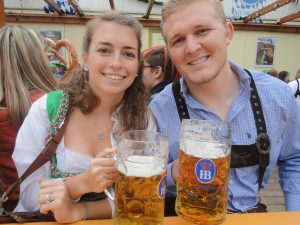 different dialects, they shared a desire to gather, celebrate, and preserve cultural traditions.
Those gatherings eventually evolved into social clubs, street festivals, and community organizations—many of which still exist today.
Perhaps no building better tells the story of Germany’s impact on Indiana than Indianapolis’ Athenaeum. Built in the late 1890s as the center of German-American life in the city, the landmark remains a hub for arts organizations, events, recreation, and one of Indianapolis’ most beloved German restaurants, The Rathskeller.
HOOSIER CELEBRATIONS
While over six million visitors travel to Munich each year to join in the original Oktoberfest, Hoosiers have plenty of opportunities to celebrate closer to home.
Among the state’s largest celebrations is Oktoberfest at German Park on Indianapolis’ south side, hosted by the German American Klub of Indianapolis. Visitors gather beneath sprawling tents for traditional music, German fare, beer, dancing, and the ceremonial keg tapping that officially opens the festivities. This year, the event will run from September 10 to 12.
Downtown, the Indiana German Heritage Society hosts GermanFest at the Athenaeum. This year’s festival, scheduled for October 3, will feature food and drinks,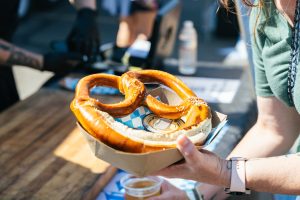 music, games, folk traditions, and even dachshund races!
Local restaurants and breweries have embraced the tradition as well. At Guggman Haus Brewing Co., Oktoberfest has become the biggest celebration of the year.
Inspired by a 2012 trip Courtney Guggenberger and her husband, Derek, took to Munich for Oktoberfest while living in Germany, the brewery’s annual celebration blends tradition with local character.
“We take what’s traditional and do it the Guggman way,” said Courtney Guggenberger, co-founder and director of marketing.
The result includes live German bands, family-friendly activities, specialty beer releases, and even lively beer stein holding competitions!
BEER WITH RULES (THAT ARE MEANT TO BE BROKEN)
Only six Munich breweries are permitted to serve beer at the original festival, and every beer must meet strict brewing standards based on Germany’s centuries-old purity laws, which limit ingredients to water, barley, hops, and yeast.
Far from the strict rules in Munich, the Guggman Haus Oktoberfest lineup of seasonal releases pay homage to those rules, while adding the occasional twist.
“We brew traditional German beers based on what we drank when we attended Oktoberfest in Munich,” said Guggenberger.
Alongside classic German-style beers and a “Festbier” lager, the brewery also serves a Radler—a refreshing blend of hefeweizen and lemonade—as well as Hoppenheim NEIPA, a hazy IPA named for the German town where the couple once lived.
“It’s a hazy IPA brewed with all German hops—which is pretty rare for this style of beer,” said Guggenberger.
TIMELESS FOOD TRADITIONS
While large, overflowing steins may be one of Oktoberfest’s most recognizable symbols, the festival is also just as defined by the foods served alongside them: sausages, pretzels, sauerkraut, mustards, and curry ketchup—a festival street food staple often served over sausages and french fries.
However, well before Oktoberfest became a global celebration, German food culture was built around neighborhood storefronts: the butcher, the baker, and so on. Located just steps from home, these family-run businesses supplied the ingredients that made up everyday meals as well as celebratory festivals. Many stores were passed from one generation to the next, preserving recipes and techniques that changed little over time.
That tradition lives on in Indianapolis at Claus’ German Sausage & Meats, where methods have been maintained since 1913. Current owner Claus Muth, the great-nephew of the original proprietor, grew up in Frankfurt, Germany and entered the trade as an apprentice at his neighborhood butcher shop when he was just 17, before earning his master’s certification in the German meat trade.
The certification required hours of study, hands-on training, and countless tests. After completing the program, Muth had the opportunity to visit the family business in Indiana throughout the early 1990s. What he found felt familiar. From loyal customers to the recipes, production methods, and storefront operations, the shop reminded him of the corner butcher stores he had known in Germany.
There is an old saying that “laws are like sausages; it is better not to see them being made.” Muth takes offense to the comparison.
“I know what’s going into my sausage,” he said. “We make everything here. It’s all meat and spices.”
As small butcher shops disappear both in the United States and Germany, Claus’ offers Indiana something incredibly unique thanks to the commitment to quality ingredients and craftsmanship. Much like Oktoberfest itself, Claus’ serves as a reminder that tradition is worth preserving.
“The food is meant to be shared and brings people together,” said Muth.
And, perhaps that is the heart of Oktoberfest. Crown Prince Ludwig invited the common citizen to celebrate his wedding, setting the framework for the every person to come together, sit at long tables, join in conversation, to sing and to dance. Even the festival’s iconic giant pretzel served a practical purpose: its oversized shape made it easy to tear apart and pass around a crowded table full of family, friends, and strangers.
“People need reasons to celebrate,” said Guggenberger. “They need something to look forward to and a chance to step away from everyday. We like giving people a reason to be happy.”
So, while many details differ between Bavaria and Indiana, past and present, the spirit remains unchanged: We are still eager to gather together with good food and drinks, proving that the best parties never really end.