

200 Years of Hoosier Culinary History
Between the lines of Indiana state history lie scenes of fellowship and wholesome, gratifying meals. Hoosier food is about comfort and community—potlucks, church picnics, brewpubs, fish fries, county fairs—all with their own signature dishes. For the past 200 years, Hoosier cuisine has passed from generation to generation, each sowing their own seed in a field of tradition that yields the true taste of the heartland.
As the “Crossroads of America,” Indiana has played as both thoroughfare to cross-country travelers, and as a catalyst for growth and distribution of some of the nation’s most beloved foods. Damon Lowe, the senior curator of science and technology at the Indiana State Museum, is intimately familiar with how Indiana’s geography has contributed to its culinary evolution.
“Indiana’s rich soils, favorable temperatures, and balance of precipitation allow crops like corn and soybeans to thrive,” says Lowe. “Livestock have always had access to high-quality food, from the acorns in the original forests to the feed corn so often seen in Hoosier fields. All this abundance has led to a high-calorie, protein-rich diet that is so commonly found on Hoosier tables.”
NATIVE AMERICANS & PIONEERS
“Indiana has always been a farming state from the first Indigenous farmers,” says Michelle Evans, Conner Prairie’s domestic trades manager. Conner Prairie is not just reenactment, but an educational touchpoint for exploring the role of both indigenous and pioneer populations in our agricultural roots.
When Indiana was admitted to the Union in 1816, the Miami, Shawnee, and Potawatomi tribes had for generations been cultivating crops of squash, pumpkins, beans, and of course, corn or maize. “But as the state was settled,” Evans says, “we see the fields and orchards of settlers taking over the fields and food forests of the Native tribes who had farmed the state for thousands of years. Indiana has always been a state of farmers, whether it was fields we might recognize as such in pre-contact periods to the clearing of millions of trees that once covered the state to modern farming today.”
Following the War of 1812, immigrant influence from Europe turned the heartland into a culinary cornucopia. German and English settlers brought sausages, schnitzels, and pies. The Irish brought potatoes and soda bread ideal for stews. Italians brought closely-guarded, generational recipes and deli traditions. And following the Great Migration in North America, African Americans enriched regional cuisine with soul foods of the South like fried chicken, greens, and barbecue.
“Not only have immigrants brought their families, but they also brought their religions, art, foods, hobbies, and skills,” says Lowe. “When settling in, each group has become woven into the fabric of Indiana, participating in daily life, working in our factories, opening restaurants, and becoming leaders in our communities.”
THE FOOD WE’RE KNOWN FOR
Each year, fields of corn streak the Hoosier countryside with green and gold. Indiana consistently ranks in the top five producers of field corn in the United States, culminating in the seasonal tradition of corn mazes on local farms. In every American state, moviegoers crunch through buckets of popcorn likely grown in Indiana—the top selling producer of the buttery snack. Indiana corn is also the base ingredient of a sweeter, regional variation on its savory southern cousin, cornbread. This point of agricultural pride has inspired innovations both in the field and in secondary education programs built around agronomy, agribusiness, and food packing.
Of course, Indiana is also known for pork cutlets as big as car tires battered and deep fried to perfection, which upstage sides and eclipse the plate with more bun overhang than a beach umbrella. Toppings vary based on personal preference, but most menus start with lettuce, onion, tomato, pickle, and mayo.
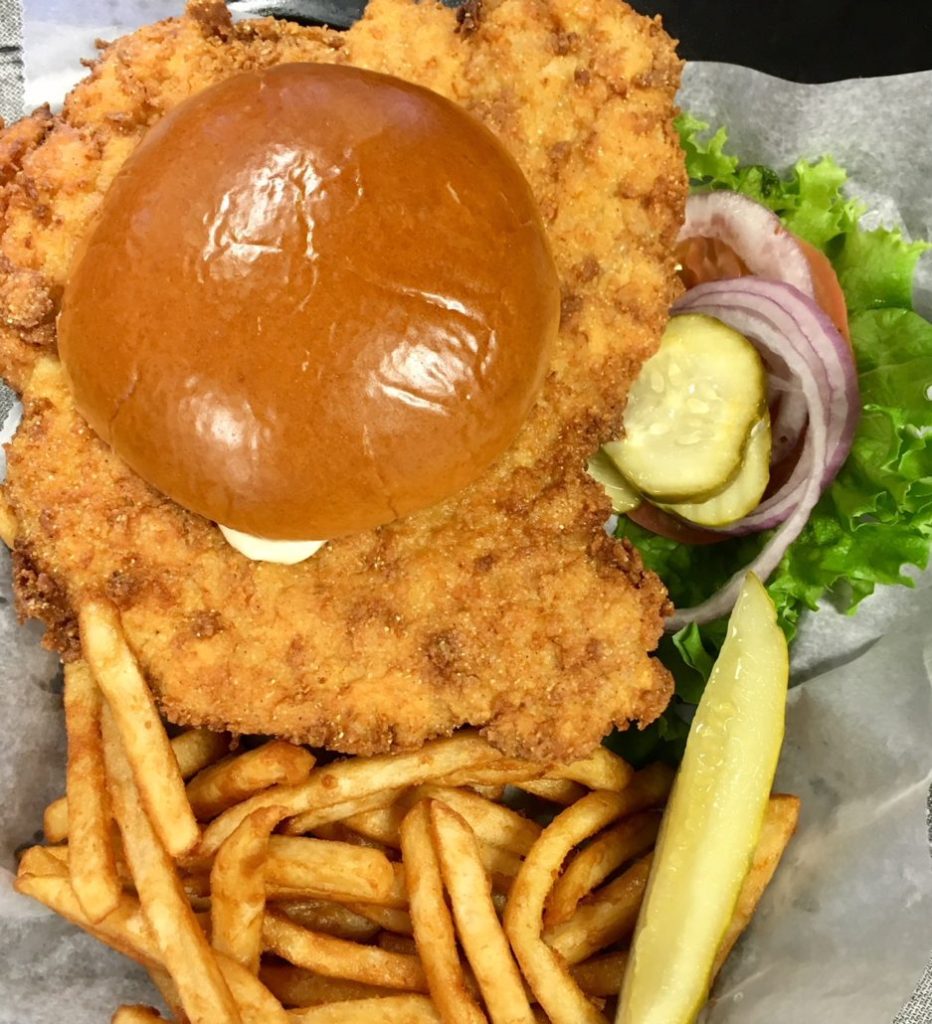 Hoosiers everywhere ritualistically enjoy the staple at diners, bars, and annually at the Indiana State Fair, but this iconic sandwich can be traced all the way back to 1908 from the ranges of Nick’s Kitchen in Huntington, Indiana. Original owner Nick Freienstein is rumored to have conceived the breaded pork tenderloin when he improvised on the classic Austrian wiener schnitzel. Thin, tenderized cuts of veal are traditionally breaded and deep fried, but Freienstein swapped veal for the more accessible pork cutlet. Diners can still enjoy the OG breaded tenderloin today in its cradle of creation alongside another popular menu item—the Marvin Harrison to its Peyton Manning— sugar cream pie.
The recipe for sugar cream pie originally traveled to the Midwest in the hands of North Carolina Quakers in 1810, colloquially known as “desperation pie” because it could be made yearround without the need for fresh fruit or meat. The pastry relies on everyday kitchen and pantry ingredients like flour, milk or cream, and of course, sugar. The result is a rich, confectionary cloud that melts in the mouth.
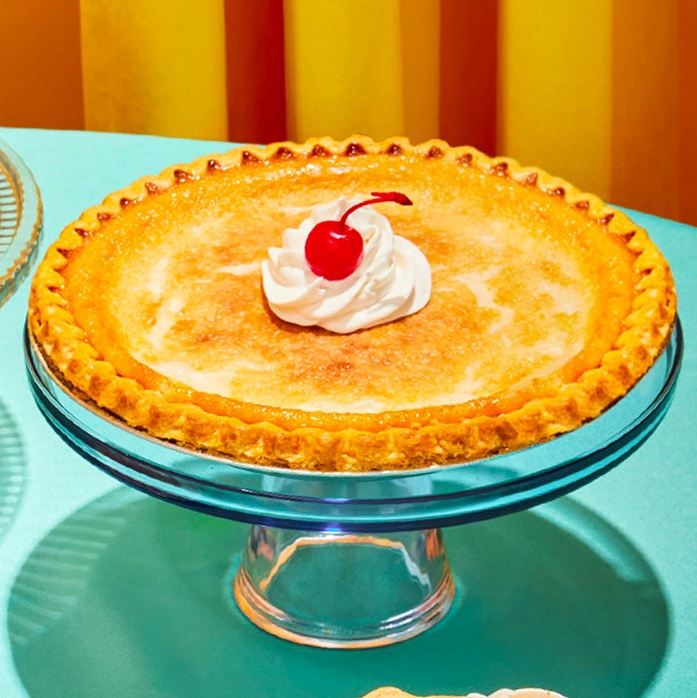 The sugar cream pie was catapulted into the national spotlight in large part thanks to Duane “Wick” Wickersham. In 1945, armed with business acumen and his grandmother’s recipes, Wickersham opened The Rainbow Restaurant in downtown Winchester, Indiana, where the sugar cream pie took center stage as a local favorite. By 1961, Wickersham purchased property east of Winchester that he transformed into a production line that today produces more than 10,000 pies in just one single 8-hour shift.
Wick’s current president and Duane Wickersham’s son, Mike Wickersham, credits the pie’s enduring legacy to the salt-of-the-earth nature of Indiana’s agricultural history.
“Most regions have their traditional dessert, and Indiana has chosen the sugar cream pie, “Wickersham says. “Even as agriculture has evolved, the sugar cream pie has remained a staple, and I like to think that Wick’s is one of the reasons it has remained so. We still make it simple and with quality ingredients with people who care.”
THE FOOD INDUSTRY IN DOWNTOWN
Indiana’s culinary history was forged in a farm-to-table mentality, rooted in those Native American and pioneer traditions. The comfort and community that sprouted from those traditions took many forms, but none so industrious as the first farmers’ markets which allowed entrepreneurial growers to get their goods in front of the public.
One of the largest of these markets first appeared right in the heart of downtown Indianapolis in 1886. The City Market worked side-by-side with vendors and independent farmers. Its success prompted expansions in the form of east and west wings, the latter of which connected the market to Tomlinson Hall. By 1974, the City Market was entered into the National Register of Historic Places, serving primarily lunchtime customers looking to partake in local fare.
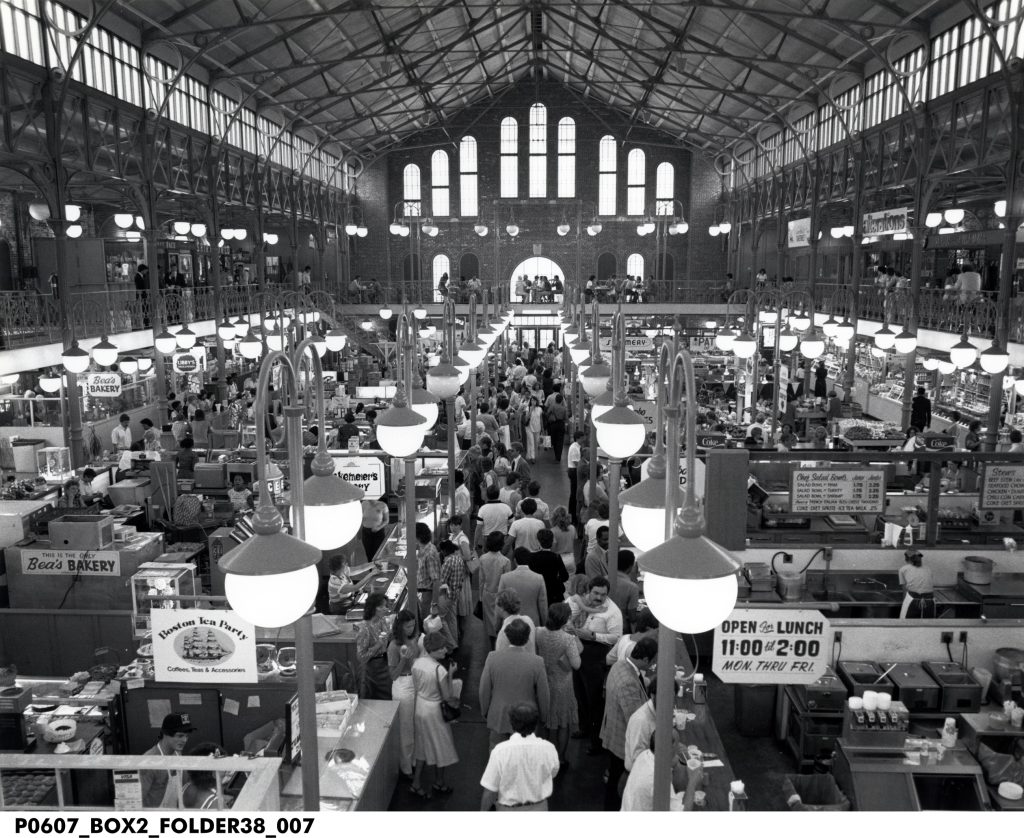 Following the demolition of both wings in 1975, the archway was left intact on the corner of Market and Delaware in the former west plaza, and remains an iconic piece of daily commutes. The market finally closed to the public in March of 2024 as part of a measure by the Department of Metropolitan Development to revitalize it with a new life as a mixed-use space.
On the other side of downtown Indianapolis, the stretch of land from Victory Field to the Indianapolis Zoo was once home to the largest pork house in the world. Founded in 1862 by Irish brothers Thomas and Samuel Kingan, Kingan and Company expanded on pork preservation methods to increase their business. In 1868, when pork packing was restricted to the winter months to prevent spoilage, employee George Stockman invented an ice curing process that allowed Kingan to remain open year-round. This innovation also benefited hog farmers whose annual yield increased, reducing chance of disease or overpopulation.
The canning industry in Indiana exploded in 1879, growing from six canneries to 166 by 1919, one of the most famous being the Van Camp Packing Company. Van Camp operations date back roughly to the 1860s, specializing in canning pumpkin, hominy, tomato pulp, and baked beans. One of the first commercial canners in the state, Gilbert Van Camp and his son, Frank, drew attention to Indiana when they added tomato sauce to the canned favorite known previously as “Boston baked beans.”
Canning has always been part of Hoosier-born brand recognition, most enduringly Red Gold. In 1942, Grover C. Hutchinson bought a central Indiana cannery as a measure to support the war effort, feeding the U.S. army throughout WWII, and blossoming into a family business that grew with each new generation of Hutchinson’s progeny.
By 1970, the business had purchased the label, “Red Gold,” from a Trafalgar cannery, and shaped it into the hallmark red, yellow, and green emblem we recognize on grocery store shelves. Manufacturing facilities located in Geneva, Orestes, and Elwood produce classic pantry staples like diced tomatoes, marinara sauce, and a burger’s favorite condiment, ketchup.
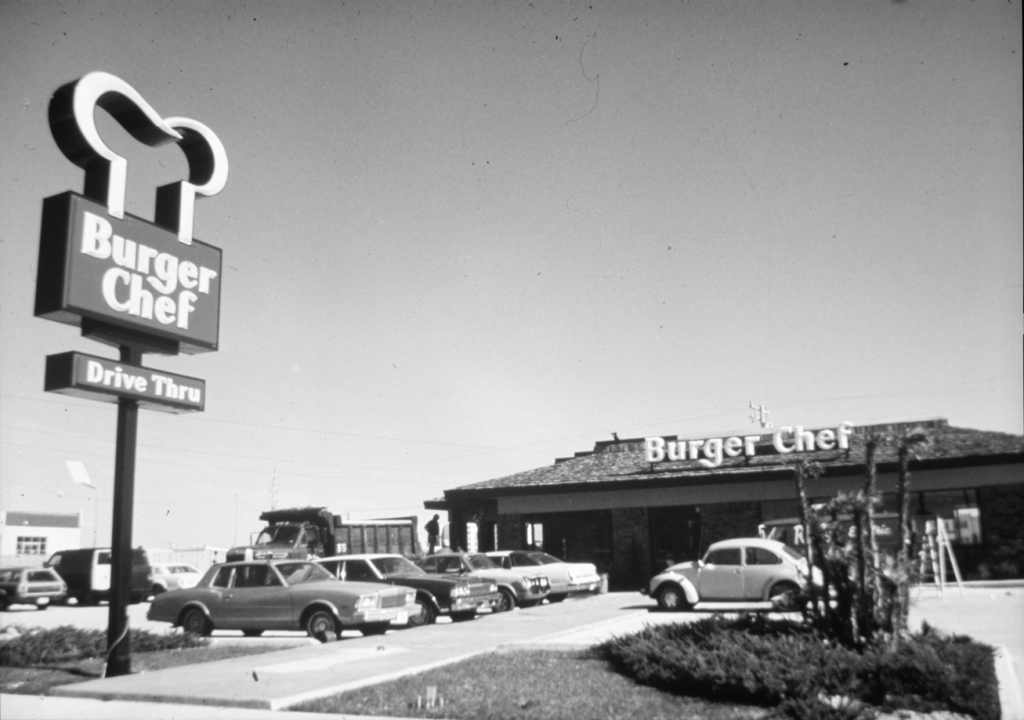 Burgers themselves are woven into Indiana’s tapestry of food culture. Indianapolis was home to the flagship location of Burger Chef, a top national food chain until it was sold to Hardee’s in the 1980s. A bit of a dark horse in the fast-food industry, Burger Chef innovated techniques that purportedly separate today’s most popular chains from the competition. The Thomas brothers designed the machine that popularized the “flame-broiled” style of burger still sizzling in Burger King’s contemporary campaigns. Their iconic “Big Shelf” sandwich was a precursor to the McDonalds’ Big Mac, featuring two patties, cheese, lettuce, and sauce all bisected by a third bun. They even beat McDonalds to the kids’ “Fun Meal” in 1973, a full six years before the debut of the “Happy Meal.”
TODAY’S HOOSIER DIET
Modern Hoosier cuisine still emphasizes a farm-to-table mentality with a focus on fresh, local ingredients, heritage recipes, and now global imagination. The Indiana food scene is rapidly growing, especially in Indianapolis, with the addition of new fusion restaurants, rustic food carts, and ephemeral pop-up events. Across the state, food festivals and fairs remain perfect opportunities for mom-and-pop restaurants and homestyle cooks to share their craft with the community. There are over 20 food and beverage trails Hoosier foodies can traverse in order to sample the best Indiana has to offer, including the Tenderloin Lovers’ Trail, the Hoosier Pie Trail, and the Hoosier BBQ Trail.
“Now Indiana has many vibrant, thriving communities across the state where you can encounter people of all backgrounds, cultures, religions and beliefs,” says Lowe. “It truly is a crossroads.”
Throughout Indiana’s history, food has always been the bridge between generations. No matter the occasion, there is bonding over favorite dishes and rousing debate on their variations. From the field to the holiday buffet, the traditions of those early farmers still imbue our contemporary approach to agribusiness and cuisine.
RELATED STORIES

Luxury Appliances for Distinctive Homes
Shopping for appliances doesn’t have to feel transactional. At Shuee’s Appliance in Indianapolis, a family-owned approach,…

Oktoberfest: Stories from Hoosiers Who Know It Best
Every fall, Hoosiers gather around beer steins, sausages and long communal tables to celebrate Oktoberfest. We talked with…

Drunk on Desserts: The Alchemy of Boozy Desserts and Dessert Cocktails
Dessert is the grand finale of any delicious meal, but with a splash of spirits, it finishes on a bombastic high note. From…